INTRODUCTION
Hello! My name is Andrea Martínez and I study law at Universidad del Norte in Barranquilla, Colombia. I born in Cartagena, Colombia and I am 20 year old.
MY PERSPECTIVE .
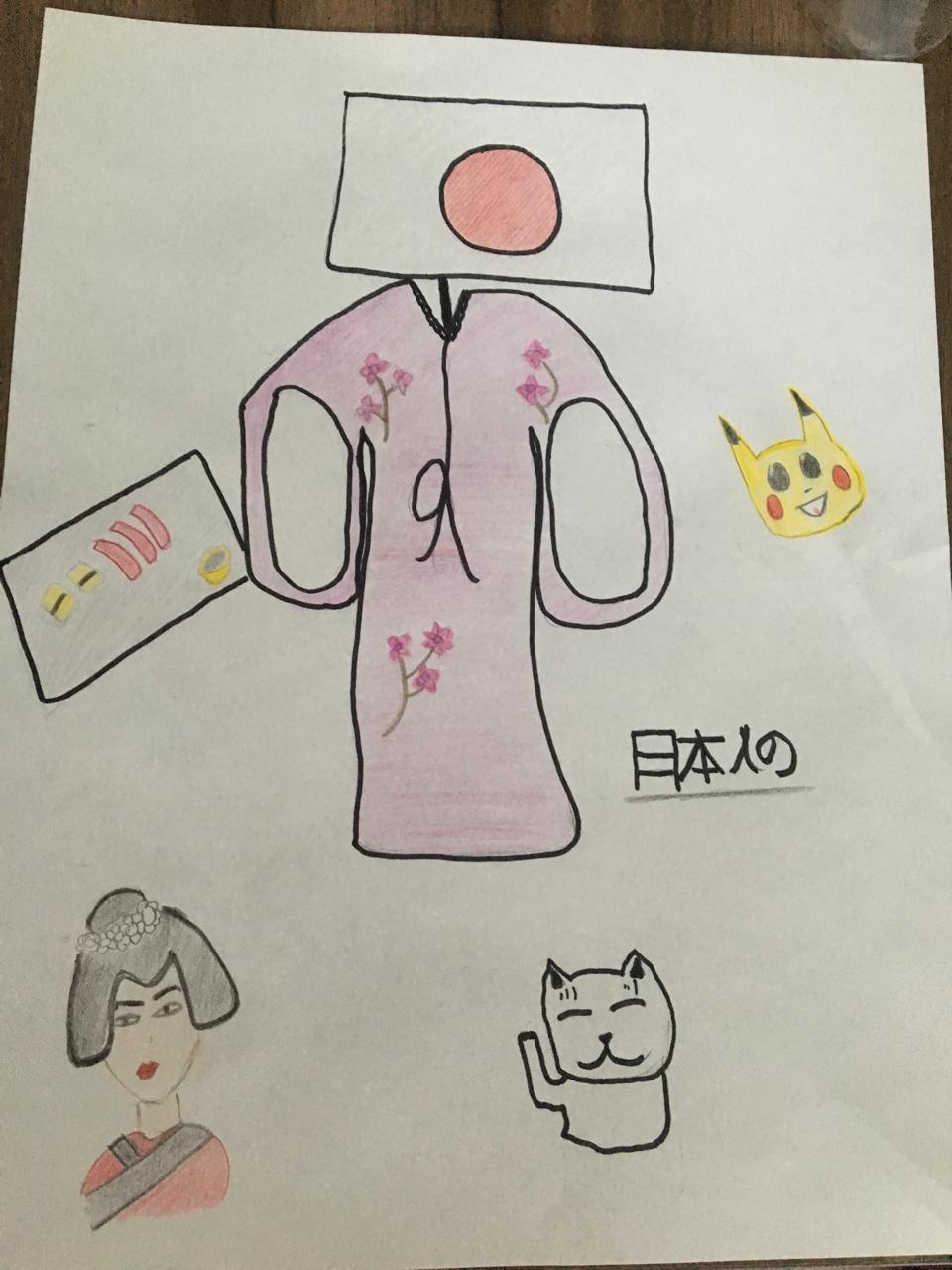
This picture represente all I believe about culture of Japan. First, the drawn show the very representative costume of Japan. Second, you can see the flag of Japan, that is very simple because it´s just a red circle in the middle of the white flag. Third, the most important character of the video games that it is a Pikachu. The only word i know is Japan in Japanese. It is a very difficult language to learn because they use different symbols to write like we use in Spanish or English. The representative dish is the variety of fish and sushi. When someone say Japanese food you immediately think in sushi. it is very famous and chef prepare variety of this food. So you can see, you can have a lot of beliefs of a culture without even gone there.
STEREOTYPES AND GENDER ROLES.
It cant be denied that Japan an Colombia are extremely different countries in various aspects, this post is going to focus on gender roles and stereotypes differences. In Japan the grandfathers convince young ladies not to study. On the contrary, they convince them to get married with men. Colombian girls have a little more freedom to decide if they want to study or not. In fact, it is not because they are not allowed to study, it is because they do not have resources to did it. Here, we compare two very different countries Japan and Colombia. Japan is very conservative and Colombia has more freedom but people do not have the resources to do what people want. On the other hand, we have stereotypes of Japanese people, we think they are very boring. But no, they just are organized people. Different for Colombians because we think that we are cheerful people. But we just see in a different way the bad things that happen to us.
GRAPHICS.
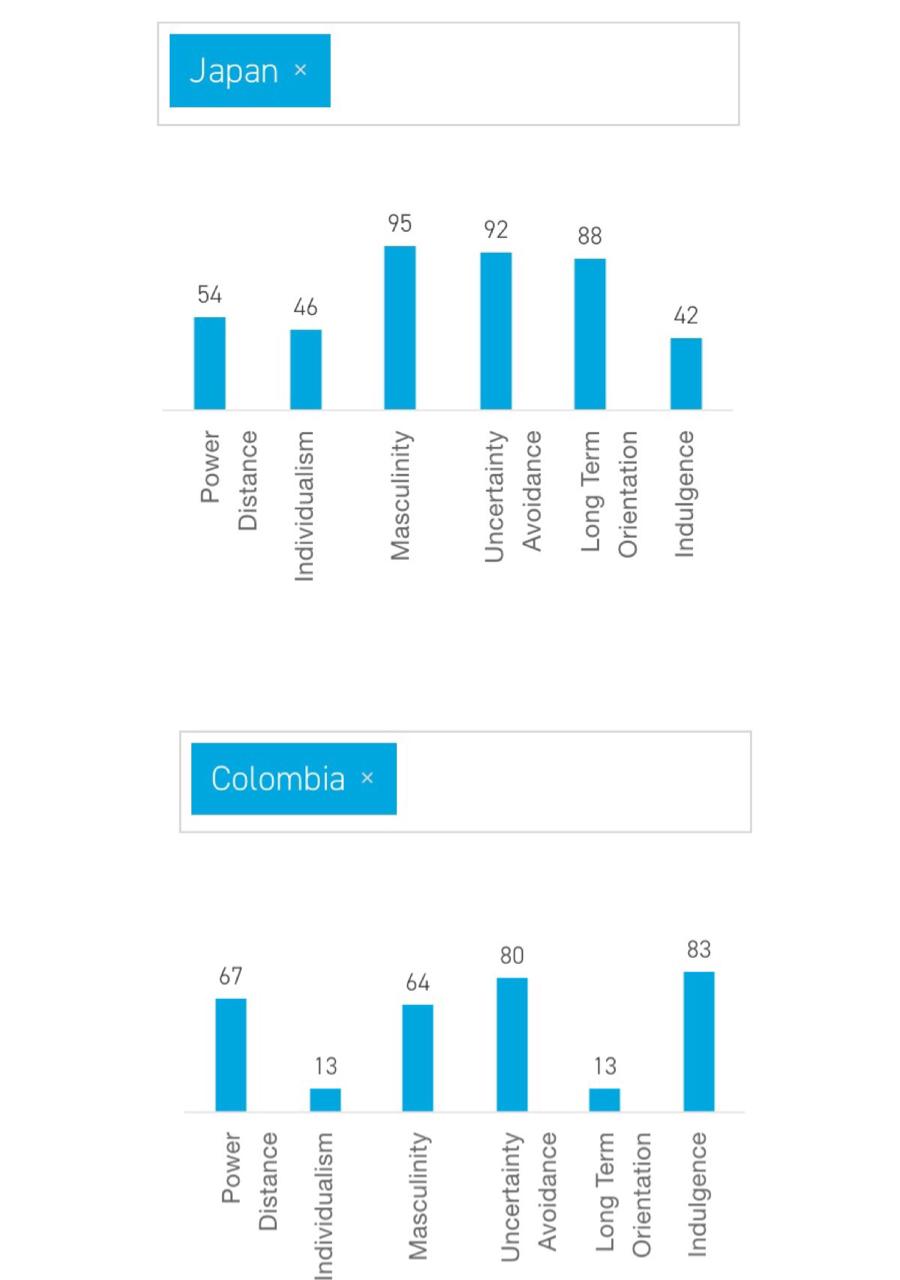
Colombia and Japan have many differences. In this graphic we can see the percentage of various aspects. Japan and Colombia have some similarities in aspects like power distance and uncertainty avoidance. This countries are considerate inequitable and ambiguity. In the other hand, aspects like Individualism, Masculinity, Long Term Orientation and, Indulgence the percentage are very different. The first one, Individualism because they just care about for their family. Unlike, Colombia it is considerate the most collectivistic cultures in the world. The second one, Japan is one of the most Masculine societies in the world. It is still hard for women to climb up the corporate in Japan with their Masculine norm of hard work. Colombia are less Masculine than Japan in this aspect. The third one, show us that Japan scores as one of the most Long Term Orientation oriented societies. They have a phrase which is you do your best in your life time and that is all what you can do. In different way, Colombia they exhibit great respect for traditions, a relatively small propensity to save for the future. And finally, Japan is considerate to have a tendency to cynicism and pessimism. However, Colombia possess a positive attitude and have a tendency towards optimism.
Lewis model
Lewis describes topes of cultures, Liner-active , Multi-active and Reactive. Colombia and Japan as said in the previous blog, are too different countries with few similarities. First of all, Colombians are Multi-active. Which means they are extroverted, appreciate interpersonal relationships and they are very emotional, also, they are not afraid to show their feelings.On the other hand, Japan has a Reactive society, almost the opposite with Colombia. Reactive people are introverted, don´t like to confront others, they prefer to be reserved with their emotions. A point Colombian and Japanese people have in common is how much they appreciate personal relationships. However, Japanese people does it more than Colombian, cause they are very people – oriented.

 Andrea blogs